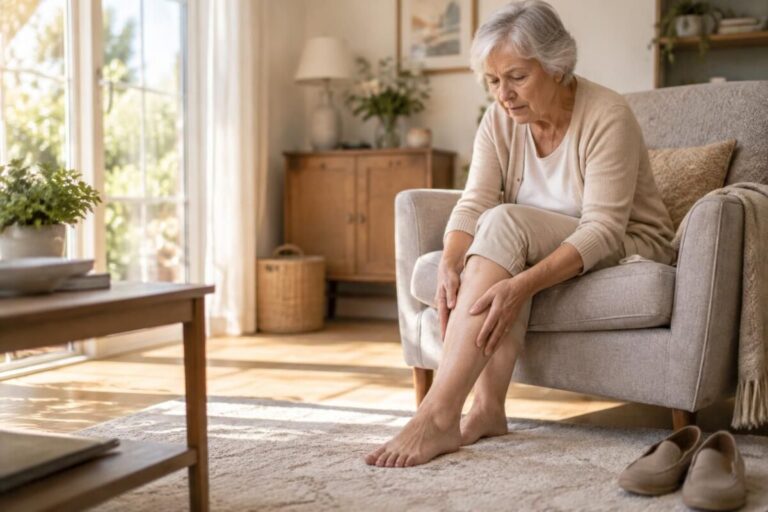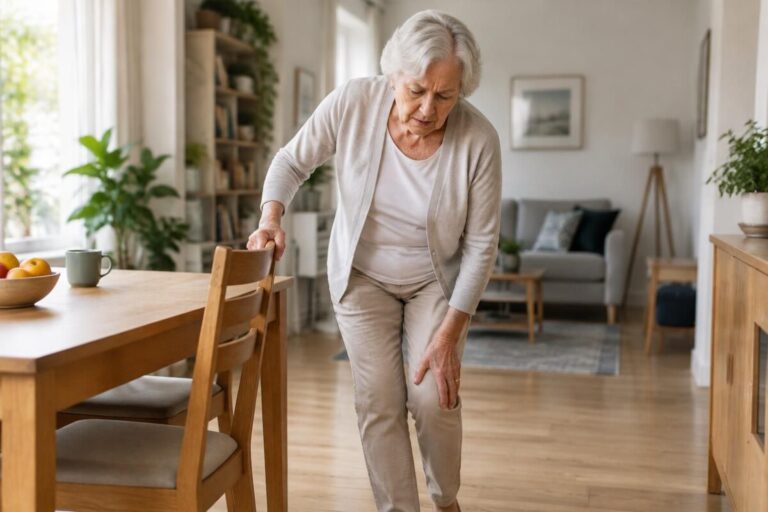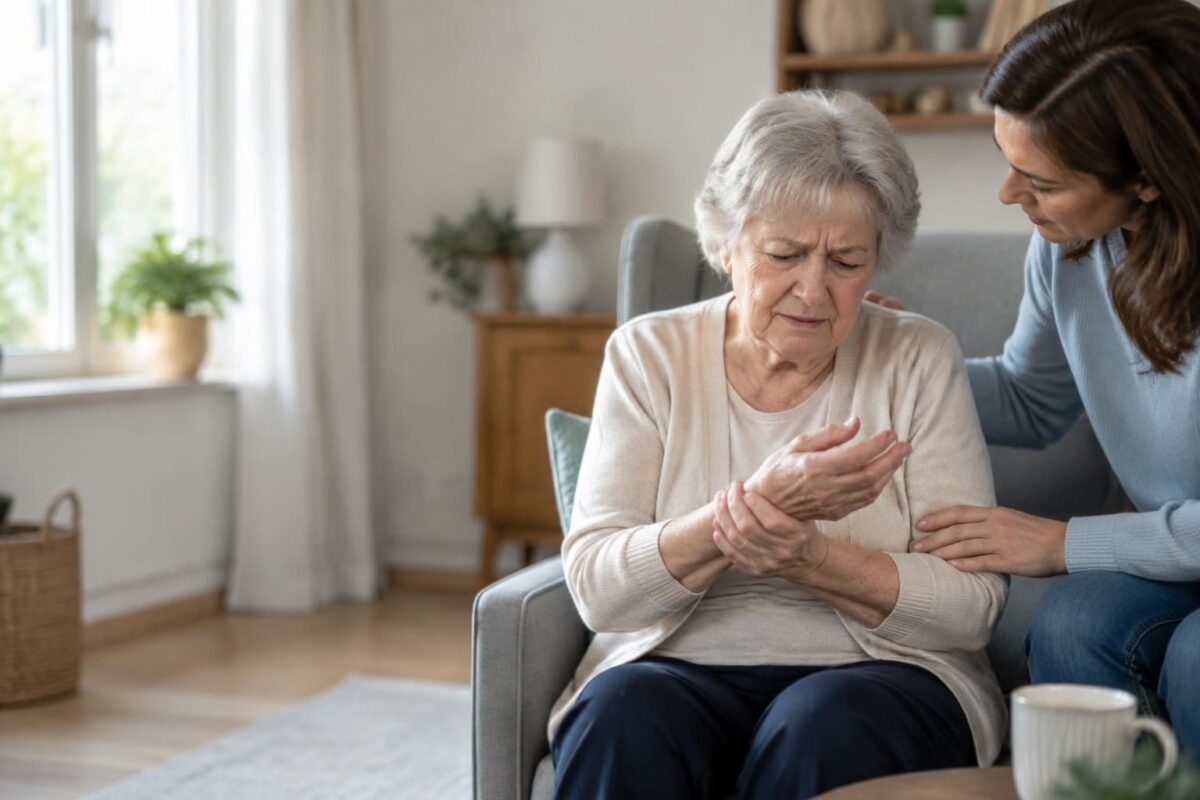
Senior safety: pain and numbness, should you act sooner?
Hello, it’s Livia.
Yes, pain accompanied by sudden or worsening numbness calls for a quick response, especially if it is accompanied by weakness or difficulty speaking.
Pain in older adults can have several causes, but certain warning signs should not be ignored. Here’s how to distinguish an emergency from a symptom that needs prompt medical evaluation.
Pain and numbness in an older adult: what to do right away
- Note when it started and check whether the sensation came on suddenly or gradually.
- Call 15 or 112 if the person has sudden weakness, facial asymmetry, or difficulty speaking.
- Make sure they are safe and don’t let them get up alone if their leg or arm isn’t responding properly.
- Watch for changes in the limb’s color, temperature, strength, and sensation.
- Arrange a medical evaluation if the numbness persists, comes back, or spreads, even without any other dramatic symptoms.
Loss of strength in the legs can also affect walking: these tips on reduced leg strength and the guidance on pain accompanied by loss of balance can help you better assess the risk of falling.
The mistake to avoid when neurological symptoms occur
Waiting for it to “go away” can delay helpful treatment. Pain that comes on suddenly with numbness on one side, weakness, confusion, or vision problems may signal a medical emergency.
In that case, don’t drive the person to the hospital, and don’t give them anything to eat or drink if they have trouble swallowing. Call emergency services and simply describe the symptoms and when they started.
When a medical evaluation can wait a few hours
A mild, long-standing sensation without loss of strength or worsening symptoms does not always indicate an immediate emergency. However, it still warrants medical advice, especially if it occurs often or interferes with walking, sleep, or daily activities.
The health of older adults also depends on careful observation: note where the pain is, how long it lasts, and what triggers it. These details will help the healthcare professional guide the examination and prevent complications.
| Situation observed | Recommended response |
|---|---|
| Sudden numbness with weakness on one side, speech problems, or facial asymmetry | Call 15 or 112 immediately |
| Limb that suddenly becomes very painful, cold, pale, or bluish | Seek urgent medical help |
| Persistent or recurring tingling, without sudden worsening | Make an appointment soon |
| Mild pain after exertion that improves with rest | Monitor how it develops and talk to a healthcare professional if it persists |
A three-step process to act without delay
- Check: ask the person to smile, raise both arms, and repeat a simple sentence. Asymmetry, an arm that drops, or unusual speech means you should call emergency services.
- Keep them safe: help them sit or lie down in a comfortable position. Clear away obstacles and don’t let them walk alone if they are unsteady.
- Share information: tell emergency services or the doctor when it started, what symptoms you observed, any medications you know about, and how the symptoms have changed. Stay with the person until help arrives.
This method does not replace a diagnosis, but it helps you respond clearly and quickly. When it comes to older adults’ safety, it’s better to report an unusual symptom than to downplay a worsening one.
Helpful questions about pain and numbness
Is sudden numbness always a medical emergency?
Not always, but if it is accompanied by sudden weakness, speech problems, facial asymmetry, or vision loss, call 15 or 112 immediately.
What should I do if the pain and tingling keep coming back?
Note how often they occur, how long they last, and the circumstances, then arrange a medical evaluation. Seek care sooner if the symptoms worsen or limit walking.
Should I massage a numb limb?
Avoid vigorous massage, especially if the limb is cold, pale, bluish, or very painful. Make sure the person is safe and seek appropriate medical advice.
How can I reduce the risk of falling during an episode?
Help the person sit down, clear the way, and don’t let them move around alone if their strength or sensation is reduced.
I hope you found these tips helpful. See you soon! — Livia