Self-care tips: how to ease pain without wearing yourself out
Hello, it’s Livia.
To ease pain without wearing yourself out, start by reducing your effort, getting appropriate rest, and choosing simple actions that don’t make it worse.
Managing pain often comes down to small adjustments, not a long list of tasks. Notice what brings you relief and save your energy for what matters most.
What to do right now to ease pain without wearing yourself out
- Stop the activity that triggers or worsens the pain, without forcing yourself to “push through it.”
- Get into a comfortable position and try resting in a way that suits you for 10 to 20 minutes.
- Take a few slow, deep breaths to release tension.
- Plan regular breaks rather than waiting until you’re exhausted.
- Note the pain’s intensity, location, and duration so you can describe it more clearly to a healthcare professional.
To avoid actions that could make things worse, read these tips for finding relief without making a mistake. If the pain affects your legs, these suggestions for relieving leg pain at home may also help you choose appropriate actions.
A common pitfall: trying to do everything despite the pain
Keeping up with household chores or trying a string of remedies can use up your energy without bringing lasting relief. Saving energy means simplifying a task, asking someone for help, or putting it off until later.
For example, if going upstairs several times to fetch things makes your pain worse, gather them within reach before you settle in. This kind of planning supports everyday comfort and helps prevent exhaustion.
Simple actions, without overpromising
Deep breathing and relaxation can help reduce tension. They don’t replace a diagnosis and won’t necessarily treat the cause of the pain.
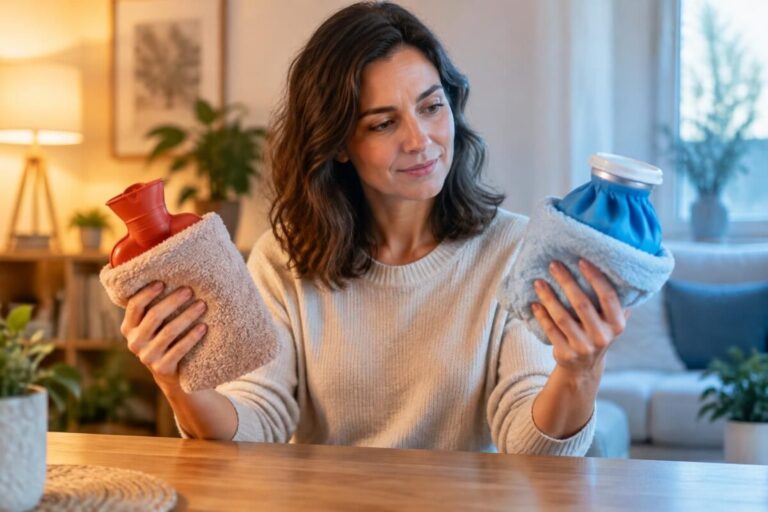
Natural ways to find relief, such as a comfortable position or a warm compress, aren’t suitable in every situation. If you’re unsure, have circulation problems, or have reduced sensation, ask for advice before using heat or cold.
| What you notice | A cautious response | When to seek help |
|---|---|---|
| Mild pain after an activity | Rest, a comfortable position, regular breaks | If it persists or keeps coming back |
| New or worsening pain | Reduce your effort and note your symptoms | Contact a healthcare professional |
| Sudden pain with shortness of breath, feeling faint, or sudden weakness | Don’t stay alone, and don’t drive | Call emergency services immediately |
A three-step method for managing pain without wearing yourself out
When pain starts, a simple method can help you decide what to do without making extra effort. The goal is to protect yourself, monitor how things change, and seek help at the right time.
- Stop and assess. Sit or lie down in a safe position. Note where it hurts, when it started, and whether the pain changes with movement.
- Choose a gentle action. Try resting, breathing slowly, or adjusting your posture. Do one thing at a time, then see how it affects you.
- Decide what to do next. If the pain is severe, unusual, getting worse, or keeps coming back, contact a healthcare professional. If you notice an emergency warning sign, call emergency services.
Self-care has its limits: it can help you feel more comfortable, but it shouldn’t delay an assessment if your symptoms are concerning. Chest pain, sudden shortness of breath, sudden weakness, or confusion requires urgent help.
Helpful questions about pain relief
How long should I rest?
There is no one-size-fits-all duration. A 10- to 20-minute break can help you check whether the position brings relief, but persistent or recurring pain should be assessed by a healthcare professional.
Can deep breathing make the pain go away?
It can help release tension and make it easier to cope with an episode of pain, but it won’t necessarily address the cause. Consult a healthcare professional if the pain is new, severe, or getting worse.
When should I seek urgent help?
Call emergency services if you have chest pain, sudden difficulty breathing, sudden weakness, severe faintness, or confusion.
How can I avoid wearing myself out when the pain comes back?
Break tasks into smaller steps, keep useful items within reach, schedule regular breaks, and ask for help with activities that make your symptoms worse.
I hope you’ve found these tips helpful. See you soon! — Livia