Independent Living Tips: 5 Simple Tips to Suffer Less at Home
Hello, it’s Livia.
To ease your pain at home, slow down the movements that trigger it, adapt your home, and ask for advice if the discomfort persists.
A few simple changes can make staying at home more comfortable and help you preserve your independence. The goal isn’t to do everything on your own, but to find solutions that meet your needs.
Do this now: 5 tips to ease your pain at home
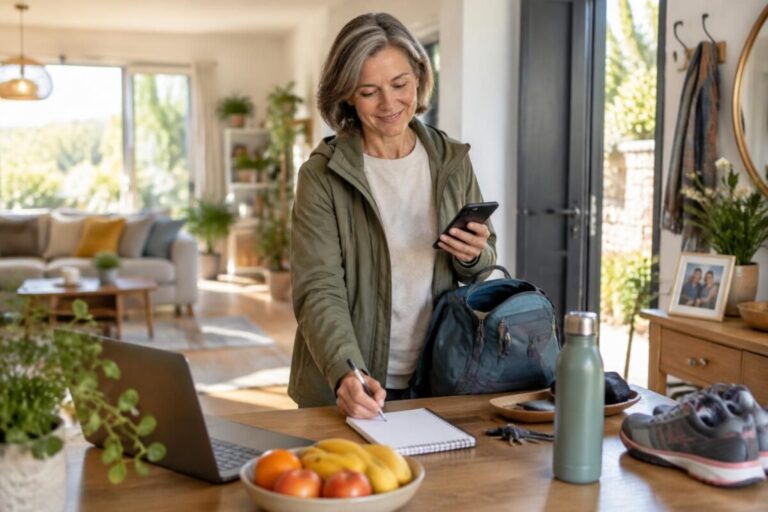
- Break tasks into smaller steps: alternate between activities and breaks instead of doing everything at once.
- Keep useful items close by: keep things you use often within easy reach, so you don’t have to bend or climb.
- Use appropriate movements: bend your knees to pick something up and avoid sudden twisting.
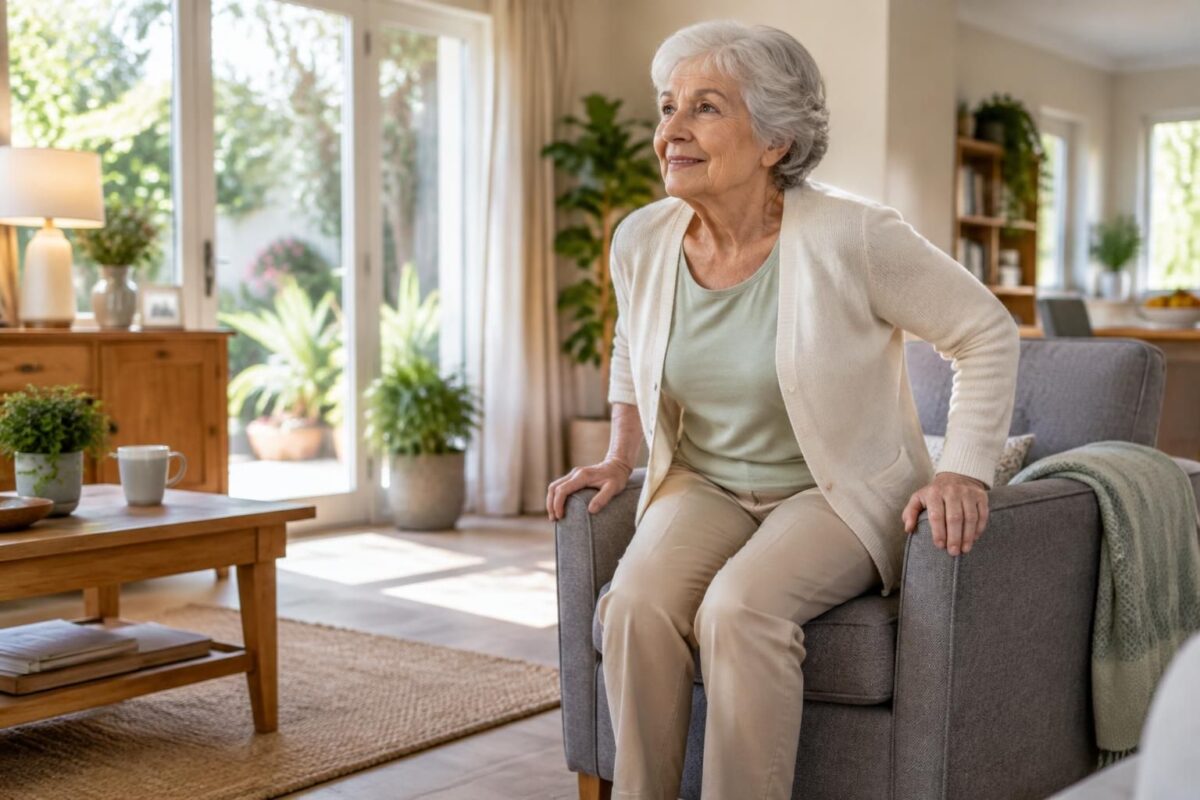
- Clear walkways: remove obstacles and improve the lighting to make your home safer.
- Ask a professional for advice: a doctor or occupational therapist can help you choose appropriate assistive devices.
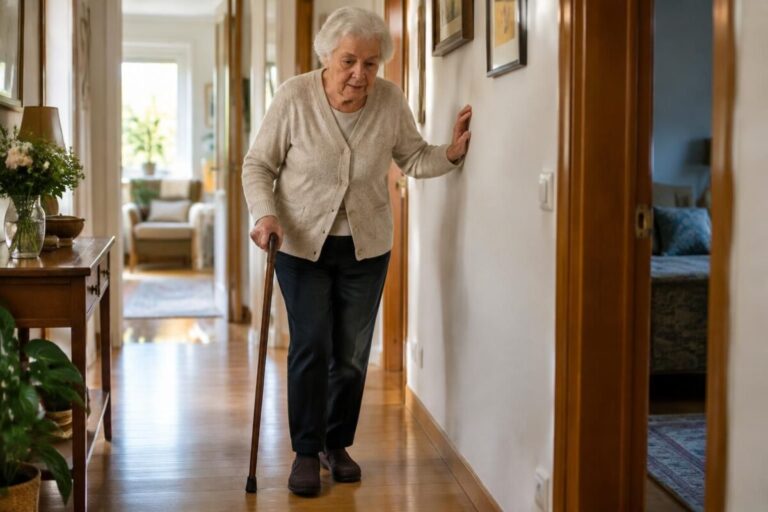
To identify priorities in your home, find out what to protect first to maintain your independence at home and learn about the signs that walking through your home is becoming too difficult.
A common pitfall: carrying on despite the pain
When a task hurts, pushing through to finish it at all costs can increase fatigue and make the next movements more difficult. It’s better to stop, change position, or put off anything that can wait.
For example, if preparing a meal causes you pain, sit down to peel the vegetables and place your utensils at counter height. These small adjustments can make the activity more comfortable without giving it up.
Adapting your home: reduce unnecessary effort
Notice when you have to bend, carry something heavy, or walk around a piece of furniture. Moving frequently used items and clearing walkways can reduce effort and help prevent falls.
If a task remains difficult, assistive devices — such as a reacher or an adapted shower seat — can make everyday life easier. Ask for advice before buying: useful equipment should suit your home and your abilities.
| Situation | Simple adjustment | Things to watch out for |
|---|---|---|
| Bending down to put things away | Keep everyday items between waist and shoulder height | Avoid storage that is too high |
| Standing for a long time | Have a sturdy chair nearby so you can take breaks | Keep the walkway clear |
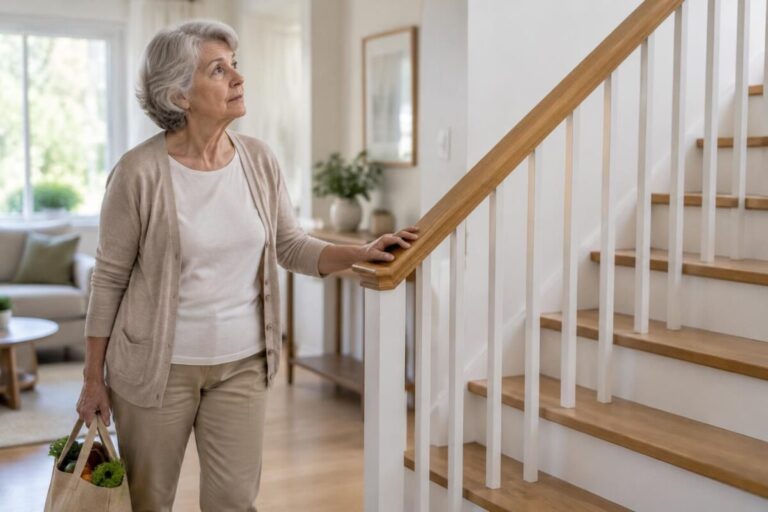
| Carrying groceries | Divide the weight between several small bags | Don’t push yourself if the pain gets worse |
Well-being and independence: move at your own pace
Staying active can support your well-being, but your activity should be adapted to your situation. A short walk in a safe space or a few gentle movements may suit some people; if you have new or worsening pain, ask a medical professional for advice before continuing.
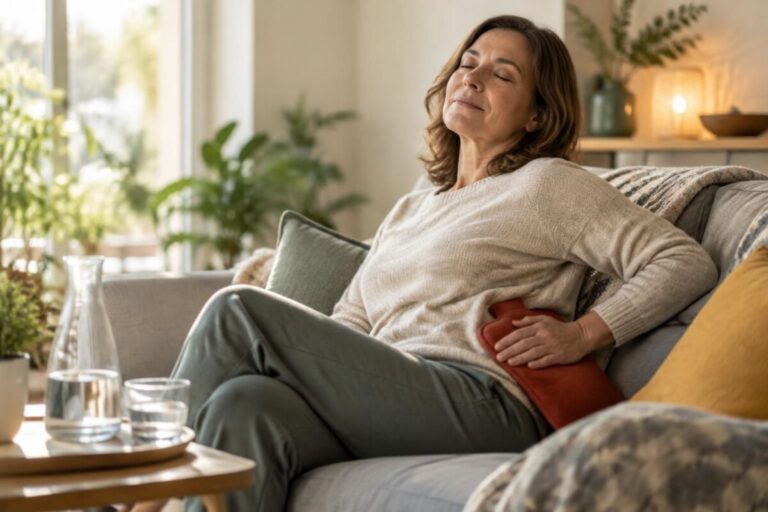
Persistent pain, discomfort that disrupts your sleep, or a sudden loss of mobility should be brought to the attention of a healthcare professional. Home adaptation advice complements their guidance; it does not replace it.
A 3-step method to adapt your daily routine
- Identify the difficult movement: note the task, when the pain starts, and what seems to make it worse.
- Try a simple change: adjust the height, move an item closer, or add a break, then see how it goes.
- Review how it’s going: if the discomfort persists, gets worse, or limits your activities, talk to a healthcare professional or request an assessment of your home.
Practical questions about pain and staying at home
Should I stop all activity when a movement hurts?
Not necessarily. Stop the movement that triggers the pain, rest, and ask for advice if it persists, gets worse, or keeps coming back.
What assistive devices can make life at home easier?
A reacher, a shower seat, or adapted grab bars can help, depending on your needs. An occupational therapist can recommend equipment that suits your home.
When should I seek medical advice?
Consult a healthcare professional if the pain lasts, gets worse, disrupts your sleep, or limits your activities. Sudden, severe pain requires prompt assessment.
I hope you found these tips helpful. See you soon! — Livia