Senior mobility: what changes when you lose strength in your legs
Hello, this is Livia.
Weakness in the legs can make walking, climbing stairs, and standing up more difficult, but taking appropriate steps can help preserve independence.
For older adults, this change deserves attention, but it does not automatically mean becoming dependent on others. Noticing what is changing makes it possible to take action early, reduce the risk of falls, and seek medical advice if needed.
What to do right away
- Notice what has become more difficult: getting up from a chair, climbing a few steps, or walking outdoors.
- Note when the weakness appears and whether it affects one leg or both.
- Clear walkways, improve lighting, and wear stable shoes to reduce the risk of falling.
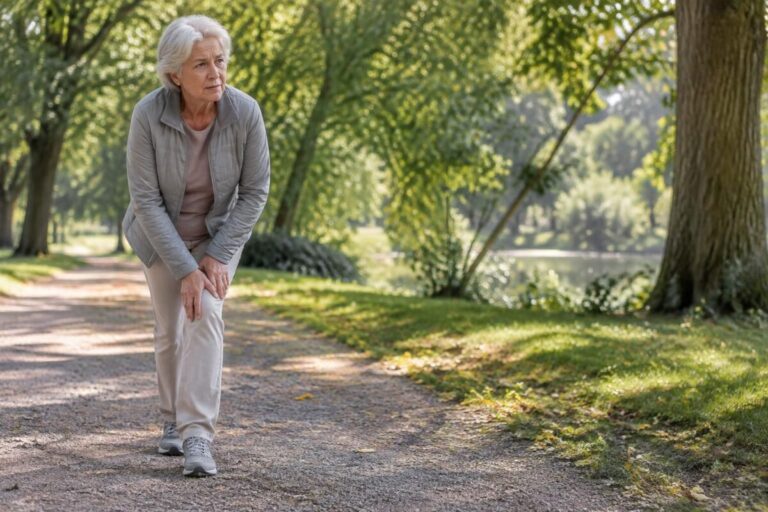
- Keep up gentle, regular activity, such as a short walk if it is safe and well tolerated.
- Talk to a healthcare professional if the weakness gets worse, persists, or interferes with daily activities.
Discomfort can have several causes. To help identify what may be behind it, see these guides to common causes of leg pain and to weak legs or lack of movement.
If the weakness is recent or getting worse, what to do changes
A sudden loss of strength, especially if it affects one side, should not be treated like fatigue that has been present for several weeks. If it comes with facial asymmetry, difficulty speaking, or sudden numbness, call emergency services.
When the change develops gradually, it may be linked to reduced activity, pain, a health problem, or several contributing factors. Sarcopenia—the gradual loss of muscle mass and strength—can also contribute to difficulty walking, but only a professional can assess the situation.
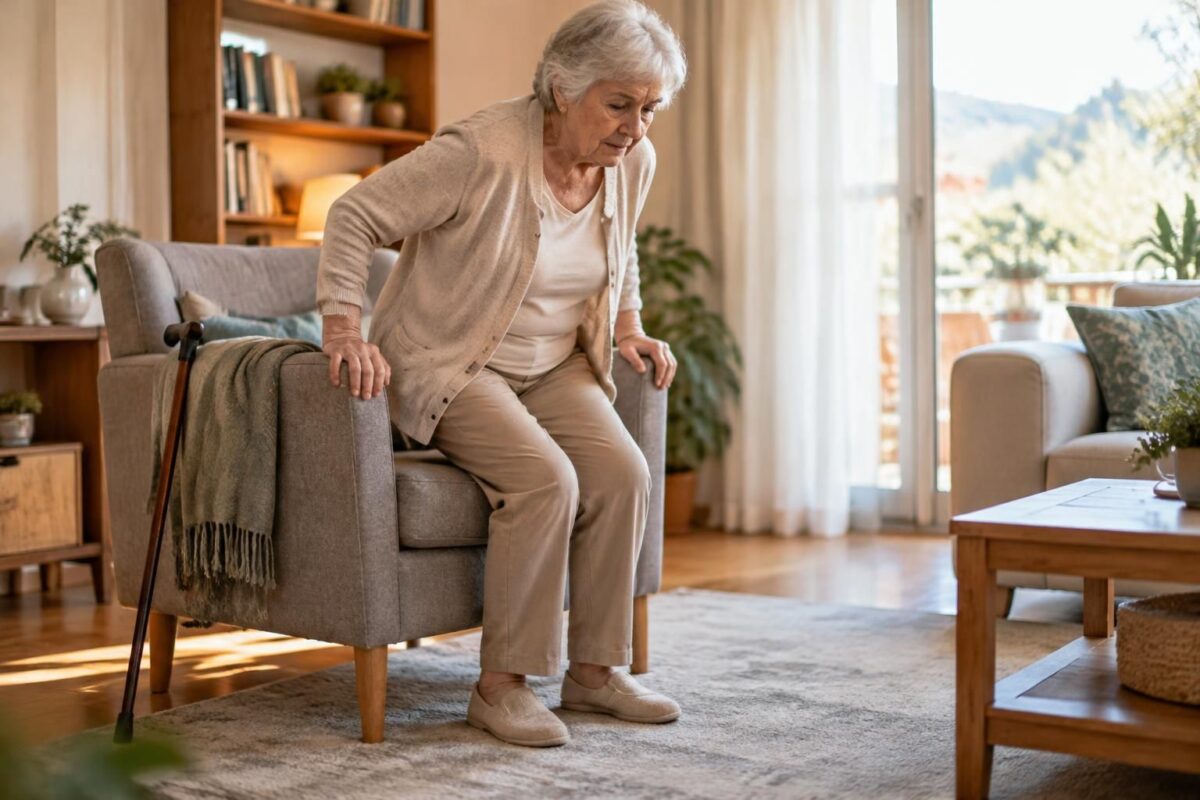
For example, someone who increasingly relies on their arms to stand up may want to mention this at an appointment. This specific detail helps track changes over time and choose suitable exercises.
Loss of strength in the legs: effects on balance and independence
The legs help us stand up, move forward, slow down, and correct a loss of balance. As muscle weakness increases, these movements can take more effort, and a person may go out less often for fear of falling.
Moving less can then contribute to further loss of ability. The goal is not to push yourself, but to preserve the movements needed for everyday life with a gradual program and, if needed, support from a physical therapist.
| Change observed | What it may make more difficult | Helpful response |
|---|---|---|
| Difficulty standing up | Getting in and out of bed or a chair | Report the change and check that the seat is stable |
| Less steady steps | Walking outdoors and maintaining balance | Choose a clear route and ask for advice if this persists |
| Unusual fatigue | Shopping and household tasks | Break up tasks and talk to a professional |
Strengthening muscles and preventing falls: make progress safely
Strength training can help maintain the strength needed to walk and stand up. Start with simple exercises near a stable support, and stop if unusual pain, dizziness, or marked shortness of breath occurs.
Fall prevention also involves the home environment: secure or remove rugs, keep objects out of walkways, ensure sufficient lighting, and install sturdy grab bars in high-risk areas. These adjustments are simple, but they make moving around feel safer.
A three-step approach
- Identify a specific movement that has changed. Note when it became more difficult and under what circumstances.
- Make moving around safer starting today. Clear the route, use a stable support, and avoid walking if you feel dizzy.
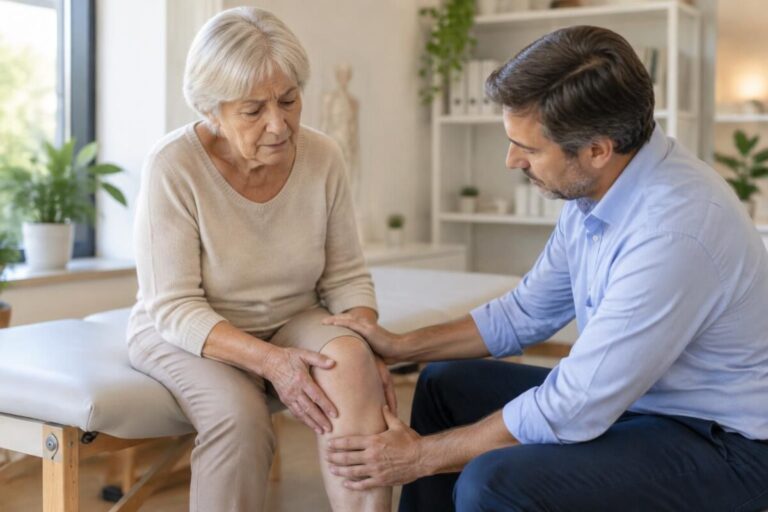
- Ask for an assessment if the difficulty persists or gets worse. A doctor or physical therapist can look for the cause and suggest suitable exercises.
The right pace is one that helps you stay active without ignoring your body’s signals. A new difficulty should be taken seriously, but an early response can help preserve independence.
Frequently asked questions about leg strength in older adults
Is loss of strength in the legs always related to age?
No. Age can contribute to muscle loss, but inactivity, pain, certain health problems, or medications can also play a role. A professional can help determine the cause.
Should you keep walking when walking becomes difficult?
It depends on the cause and how safe it is. If walking is painful or unsteady, or if it causes dizziness, do not push yourself and ask a healthcare professional for advice.
What exercises can help maintain leg strength?
Simple exercises such as standing up from a stable chair or walking a short distance may be suitable for some people. Do them near a support, and ask a professional for advice if you have a medical condition, pain, or poor balance.
When should you seek medical attention promptly?
Sudden weakness, especially on one side, or weakness accompanied by difficulty speaking, facial asymmetry, or sudden numbness requires calling emergency services.
I hope you found these tips helpful. See you soon! — Livia